
 By
By Introduction
Artificial intelligence is transforming healthcare by improving diagnosis, treatment planning, patient monitoring, and administrative efficiency. Healthcare systems worldwide are facing rising patient loads, workforce shortages, and increasing operational costs. AI-powered technologies are helping address these challenges while enabling more personalized and accessible care.
From predictive analytics to robotic-assisted surgery, AI is reshaping how healthcare professionals make decisions and how patients receive treatment. Its role continues to expand as data-driven medicine becomes central to modern healthcare delivery.
AI in Medical Diagnostics
One of the most significant contributions of AI in healthcare lies in improving diagnostic accuracy. Machine learning models can analyze large volumes of medical images and identify patterns that may not be easily visible to clinicians.
Key benefits include:
- Faster interpretation of radiology scans
- Early detection of diseases such as cancer and cardiovascular conditions
- Reduction in diagnostic errors
- Support for clinical decision-making
AI-assisted diagnostics are especially valuable in regions with limited access to specialist doctors. These tools enable healthcare providers to deliver quicker and more reliable diagnoses.
Personalized Treatment and Precision Medicine
AI plays a critical role in tailoring treatment plans according to individual patient characteristics. By analyzing genetic data, medical history, and lifestyle patterns, AI systems help clinicians select therapies that are more likely to be effective.
Major advantages include:
- Identification of patient-specific risk factors
- Optimization of drug selection and dosage
- Prediction of treatment outcomes
- Support for chronic disease management
Precision medicine supported by AI ensures treatments are not only effective but also safer for patients.
AI-Powered Robotic Surgery
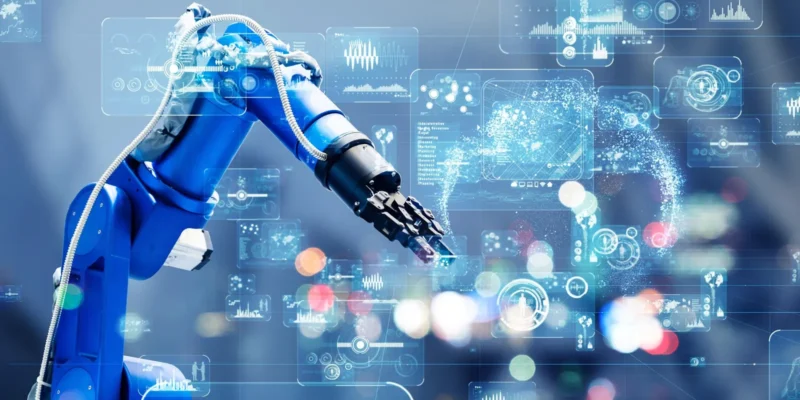
Robotic-assisted surgery is improving surgical precision and patient recovery outcomes. AI-enabled robotic systems assist surgeons by enhancing control, stability, and visualization during procedures.
Important contributions include:
- Increased surgical accuracy
- Reduced blood loss during operations
- Shorter hospital stays
- Faster patient recovery time
These systems do not replace surgeons but instead act as advanced tools that enhance surgical performance.
Remote Patient Monitoring and Telemedicine
AI supports remote healthcare delivery through wearable devices and telemedicine platforms. These technologies continuously monitor patient health indicators and alert providers when intervention is required.
Benefits include:
- Continuous tracking of vital signs
- Early identification of health risks
- Improved management of chronic illnesses
- Reduced need for frequent hospital visits
Remote monitoring enhances access to healthcare services, especially for elderly patients and those living in remote areas.
Drug Discovery and Development
AI significantly accelerates the drug discovery process by analyzing biological data and predicting how compounds interact with disease targets. Traditional drug development can take many years, but AI helps shorten this timeline.
Applications include:
- Identification of promising drug candidates
- Prediction of molecular behavior
- Optimization of clinical trial design
- Reduction of development costs
These improvements enable faster delivery of new treatments to patients.
Enhancing Hospital Operations and Workflow Efficiency
Healthcare institutions manage large volumes of administrative data daily. AI systems automate routine tasks and improve operational coordination.
Examples include:
- Appointment scheduling optimization
- Patient record management
- Resource allocation planning
- Workflow automation for medical staff
By reducing administrative burdens, healthcare professionals can focus more on patient care.
Predictive Analytics for Disease Prevention
Predictive analytics powered by AI allows healthcare providers to anticipate disease outbreaks and identify high-risk patients before symptoms become severe.
Key contributions include:
- Forecasting disease progression
- Identifying vulnerable populations
- Supporting preventive healthcare strategies
- Improving public health planning
Preventive care supported by predictive models reduces long-term healthcare costs and improves patient outcomes.
Ethical Considerations and Challenges
Despite its advantages, AI adoption in healthcare raises important ethical and operational concerns that must be addressed carefully.
Common challenges include:
- Protection of patient data privacy
- Ensuring transparency in decision-making algorithms
- Managing regulatory compliance
- Avoiding bias in AI training datasets
Responsible implementation ensures AI technologies remain trustworthy and beneficial.
Future Outlook of AI in Healthcare
The integration of AI into healthcare systems is expected to expand significantly in the coming years. Advances in machine learning, natural language processing, and wearable technology will continue improving clinical accuracy and accessibility.
Future developments may include:
- Real-time disease prediction platforms
- Fully integrated smart hospitals
- Advanced virtual health assistants
- Improved population health analytics
AI is not replacing healthcare professionals but strengthening their ability to deliver better and faster care.
Frequently Asked Questions
1. How does AI improve patient safety in hospitals
AI enhances patient safety by detecting anomalies in medical data, reducing prescription errors, and supporting clinicians with accurate decision-making tools.
2. Can AI reduce healthcare costs for patients
Yes. AI reduces unnecessary testing, shortens hospital stays, and improves preventive care strategies, which collectively lower treatment expenses.
3. Is AI useful in managing chronic diseases
AI helps monitor long-term conditions such as diabetes and heart disease by analyzing patient data and providing early alerts for complications.
4. What role does AI play in emergency care
AI assists emergency teams by prioritizing patients based on severity and providing rapid diagnostic insights during critical situations.
5. How does AI support healthcare professionals rather than replace them
AI acts as a support system by handling repetitive tasks and providing analytical insights, allowing professionals to focus on clinical judgment and patient interaction.
6. Can AI help improve rural healthcare services
AI-powered telemedicine platforms enable remote diagnosis and monitoring, improving access to medical expertise in underserved regions.
7. What skills are needed for healthcare workers to adapt to AI technologies
Healthcare professionals benefit from learning digital literacy, data interpretation skills, and familiarity with AI-assisted clinical tools to effectively integrate these technologies into practice.